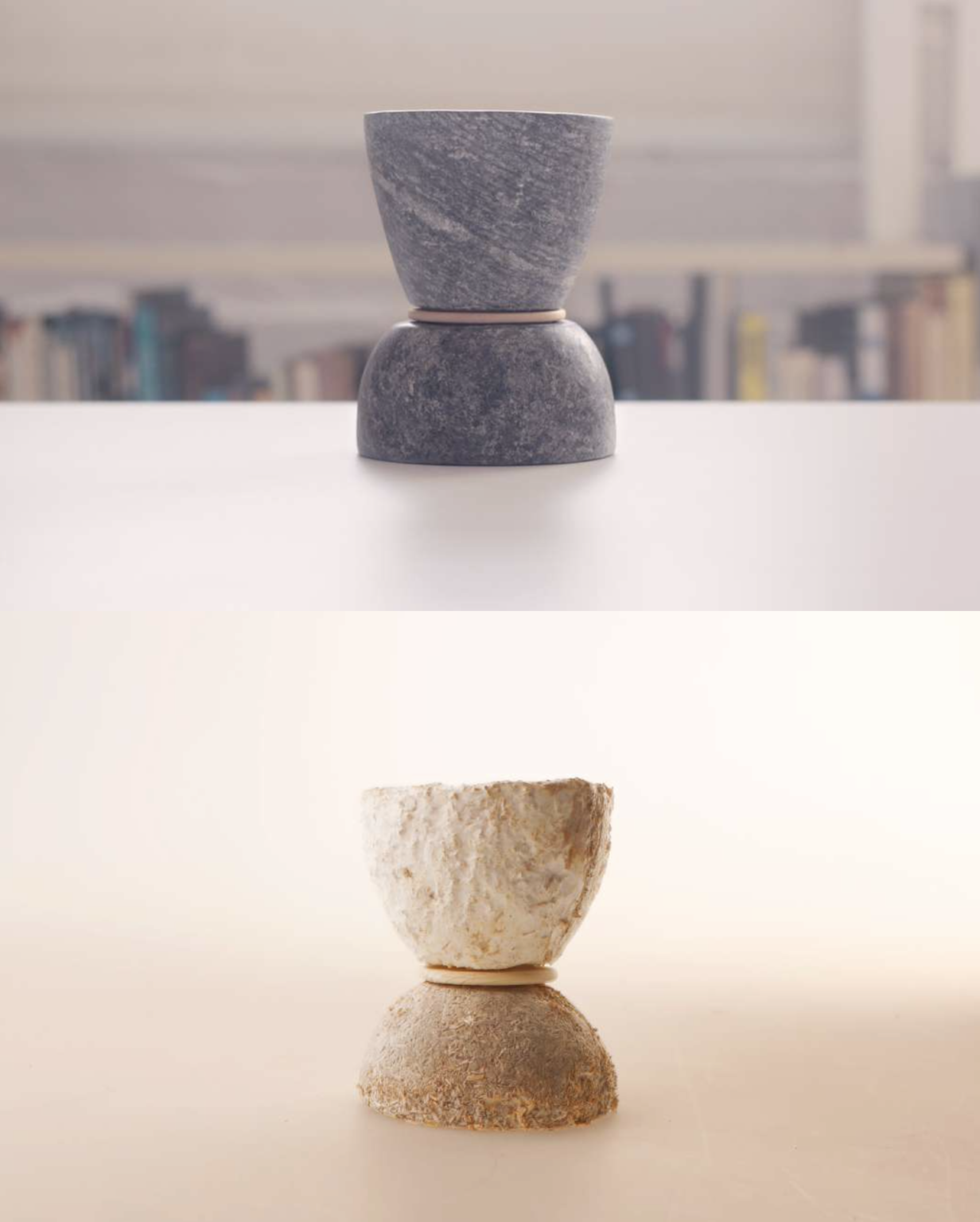
Mycofabrication
Growing Materials
Mycofabrication is the process of working with mycelium—the root-like network of fungal cells—to design and form natural, biodegradable, and sustainable materials
The mycelium’s metabolic characteristics and needs offer an incredible opportunity to collaborate on a symbiotic circular relationship: we provide agricultural and textile waste resources as a substrate onto which the mycelium can propagate and flourish adapting to the shapes and matrixes of the growing environment we provide
material structures and matrixes that can be employed as alternatives to traditional ones used in construction, interior design, and fashion. They can be combined with various natural fibers and agricultural waste to form strong, lightweight, fire retardant and eco-friendly materials.
SYLIA designs, develops and prototypes mycocomposites and mycelium-based leather goods.
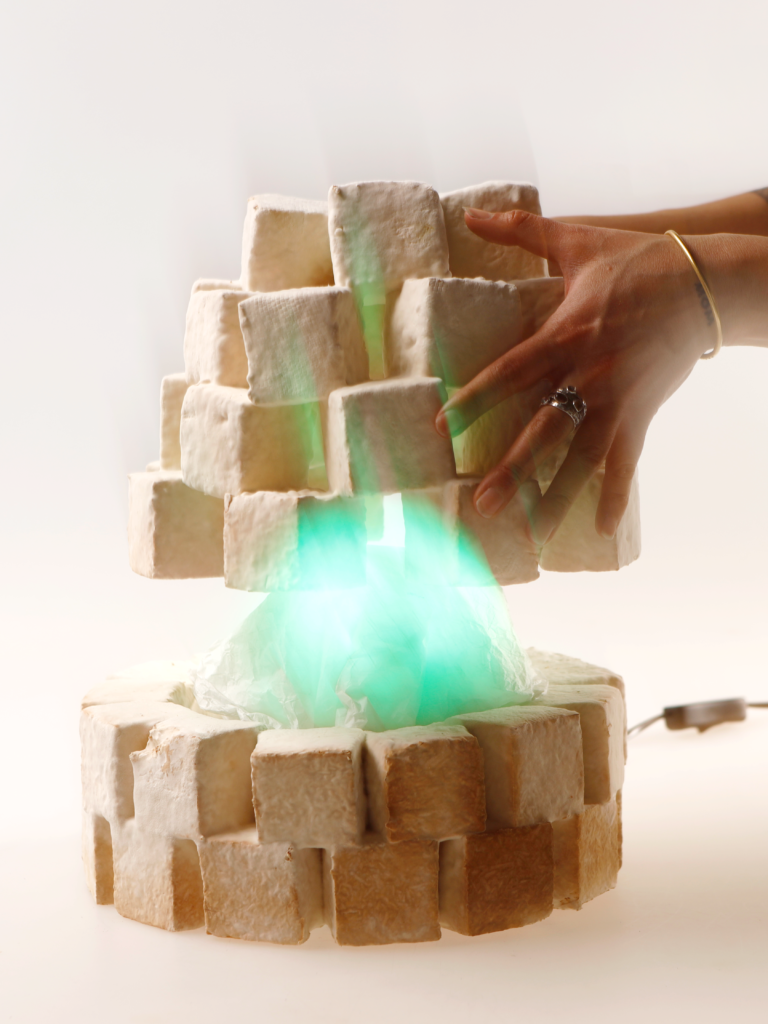
Welded Light
No screws, glue, or synthetic binders — just biology and intention.
These are biowelded mycoblocks. In our R&D we tested with hydraulic press, and found out that the strongest part of the object were the junctures where the mycelium skins of each block connected.
This design potential is unique to mycelium’s role as the connector in the natural environment: its glue-like properties allow modular fabrication and design freedom.
Complex shapes, hallow forms, and interlocking geometries are seamlessly produced. The finishes are naturally textured — earthy, soft, and warm colors.
The materials are lightweight yet dimensionally stable. They are fully biodegradable and compostable, significantly cutting manufacturing waste and energy use.
Mycelium’s natural technology affords countless creative combinations, our lamp on the right is simply one example.
The NF2B
Non-Fungible Fungi Bag
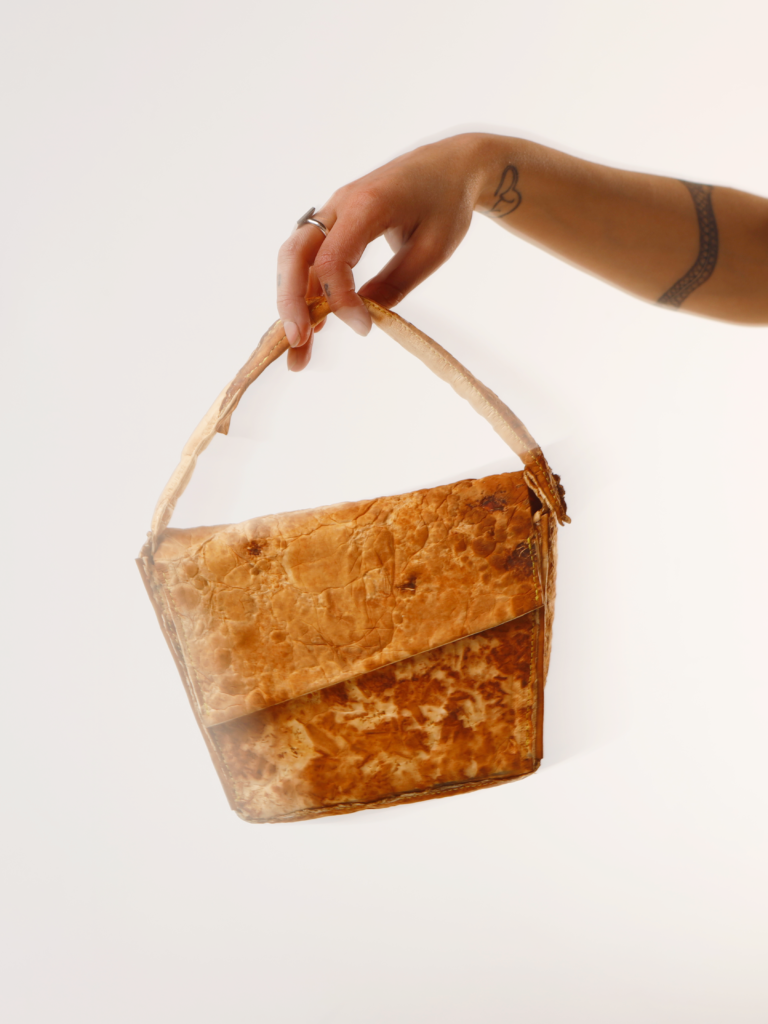
This is a handbag that is so unique, there’s only one of each kind in the world.
Born from a collaboration with accessory designer Sigrid Savva, the bag is called non-fungible as a nod to the digital world of non-fungible tokens, which were developed to counter the infinite copying possibilities of files and codes.
The bag is completely made out of mycelium. Each employed leather-like sheet has its own natural pattern. The NF2B counters the fashion world obsession with fakes and dupes – a culture stemming from the nihilism of mindless consumerism that has hallowed out the creativity from designer ateliers.
Fashion items have stopped being symbols of craftsmanship: they are consumer goods that only represent social standing and stratification. This is why people will readily buy dupes to keep up with the Joneses. Yet this consumption of social signifies through commodities shows a lack of awareness about the materials from which these objects are made, as well as the whole supply chain that produces them. This results in a lack of appreciation for who and what is behind something beautiful.
In a world plagued with multicrises, we ask ourselves if the time has come to move away from objects that contribute to its further destruction. We believe in craftsmanship that relies on collaborations with humans and other organisms to create meaning, beauty and connection.
Windows to the Forest
Mycelium-based acoustic panels are made to bring a natural element to otherwise aseptic environments.
The method we used to produce them supports sound absorption and thermal conductivity. The aesthetic qualities explore surfaces that expand the experiences of interior living.
The sound absorption coefficient is comparable to that of the conventional acoustic ceiling tiles.
Various shapes and colors can suit different interior design projects.
The panels are free from synthetic materials, ensuring environmental safety.
The material is fire retardant, which enhances safety features for diverse environments.
Thermal conductivity is kept low at approximately 0.05–0.07 W/m·K, providing insulation benefits.
The panels can be custom made to fit well in offices, restaurants, retail spaces, and other environments requiring effective sound management.
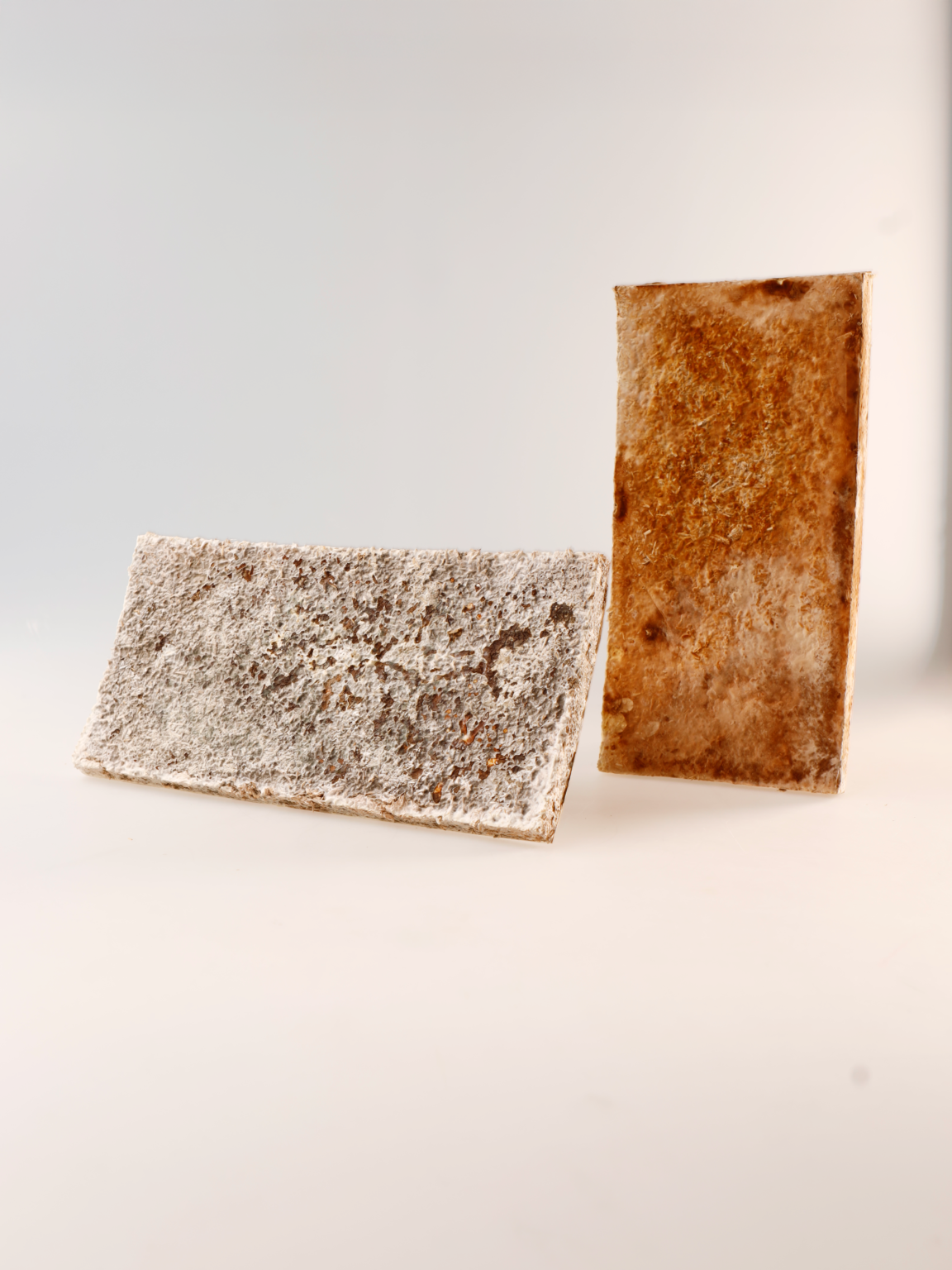
.Shh.
Collaboration with designers Tiago Volpato and Gabriel Freitas